You know what tastes really good together? Brie spread on a halved Ciabatta, with extra virgin olive oil drizzled on top.
Brie has so much character by itself, even though it's nuanced. Together these two ingredients make one unbelievable sandwhich.
Right now my Ciabatta dough is ageing in the fridge, as per the legendary No-Knead Crusty White Bread recipe gratiously referred to me by Leah from the Bread from a Novice Baker blog. This recipe is supposed to produce a Sourdough taste without needing a starter. Sounds intriguing.
Tuesday, August 24, 2010
Monday, August 23, 2010
Illy's Capsule Offering - iperEspresso
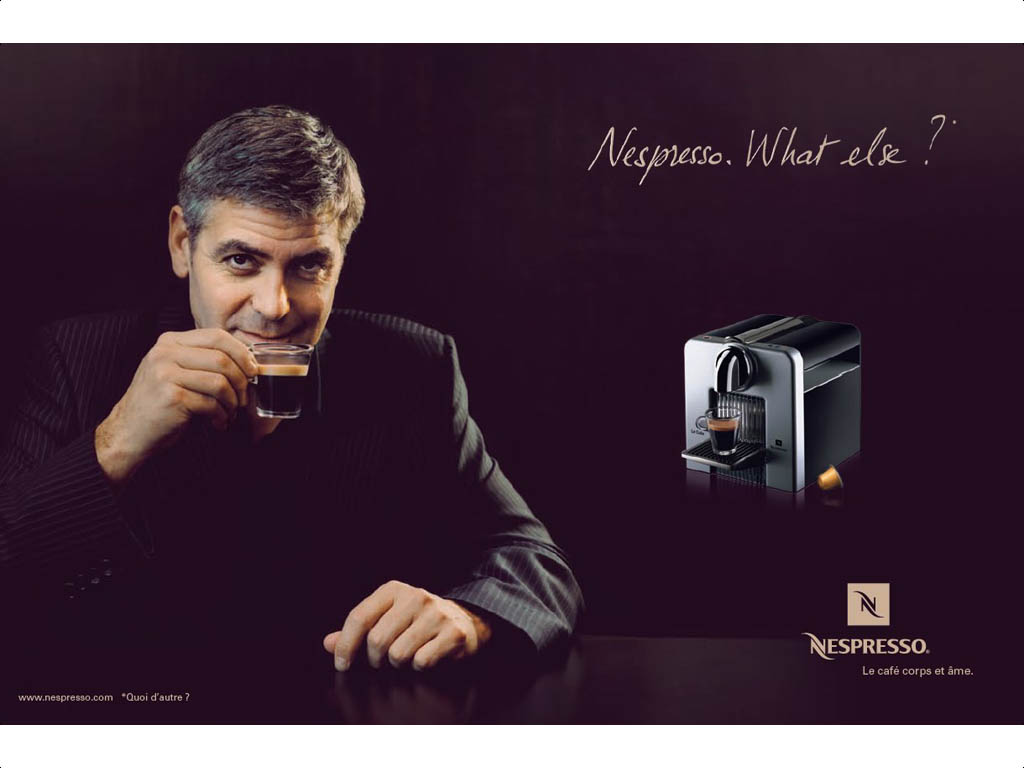
Capsules store ground espresso, and keep it fresh with an airtight seal. Instead of reconstituting old coffee like the instant approach, capsule machines pull a new shot of espresso right away - true instant. I don't know who was the first to do it, but it seems to me that Nespresso wears the capsule crown right now. Their popularity has exploded. You can see George Clooney's face drinking a crema-rich shot in virtually all major cities around the world.
More companies have recognized the capsule trend, and have tried to capitalize on it. Lavazza and Illy are two major coffee suppliers with capsule systems, Illy beginning in 2008, and it now looks like Nespresso has substantial competition - which is probably good for consumers. However only Illy counts as real competition in the home coffee drinkers arena, since only Illy and Nespresso sell wildly affordable coffee machines. Lavazza's Espresso Point Matinee - the small version - retails for over $650, which is probably beyond what home drinkers would spend on a pod system. Lavazza's real target seems to be offices.
Illy's newest offering is the FrancisFrancis! Y1. Since the SingleServeCoffee review of the machine reads like an Illy marketing pamphlet, I decided to write about the new iperEspresso machine myself, and give some background to the debate between Illy's capsule system and the longtime champion of espresso capsules, Nespresso.

FrancisFrancis! Y1
I don't think I could differentiate between the espresso of Illy, Lavazza, and Segafredo, but having enjoyed an especially unearthly cup at the Illy Caffe in Rome's Termini Station (manned solely by female baristas - a unique place), I couldn't ignore Illy's attempt at a capsule system. Their coffee just tastes so good. Whereas Nespresso is owned by Nestle, known for its plebian Nescafe brand of instant coffee, Illy's iperEspresso system can count on its illustrious parentage as the source of Arabica coffee to a large chunk of espresso houses in the world - for the last 80 years. At the very least, we know that the ground espresso going into their capsules is of high quality.
The systems are very similar - so similar that I'm confident that one served as an inspiration for the other. Nespresso has been around since the late 1980s, and has really mastered the art of marketing coffee to yuppies. Their capsules are regal, with ten capsules packaged in a long, richly-colored box, giving the impression of a box of truffles. Their machines are tasteful and conservative, and embrace the trend towards artistic kitchen appliances. Finally, they innovated the idea of "coffee flavours", something previously uncommon with respect to espresso, offering drinkers the choice of 16 distinct origins and types of espresso. Starbucks has taken a cue from Nespersso as well, now marketing their own luxury single-serve coffee system, 'VIA Ready Brew' packets.
The Illy iperEspresso system has only 4 flavours, or to be more precise, two different roast levels (medium and dark), a decaf, and a lungo. Four types may actually be an improvement over the Nespresso model. To me, offfering 16 flavours seems like it must have been a gamble for Nespresso. Too much choice can dilute the impression of exclusivity and quality, making each flavour seem less prestigious. It gives the impression that Nespresso was unable to predict which flavour would be best loved, and therefore provided all of them. Perhaps Illy took a cue from Apple in their iPhone production, believeing that they understood the desires of consumers well enough to make choices for them, and produce a single excellent product, while their competitor Android promoted choice by consumers.
Still it's funny comparing Nespresso to iPhone's nerdy competitor Android, given Nespresso's obvious sex appeal. Just check out Nespresso's competition for best 'Nespresso Moment.' Each picture has a pretty girl drinking coffee in a revealing state - in the bathtub, in bed, or in her morning gown. Every Nespresso boutique I've been to has the Nespresso charm. Employees dress like first-class stewardesses, giving shoppers the feeling that they are exclusive guests, there to be served and indulged. In Israel, the lady who served me was wearing a black tunic with a minimalist gold belt. As far as marketing is concerned, Nespresso is a classy lable.
Illy's iperEspresso machines are manufactured under its own FrancisFrancis! lable, which produced respected espresso machines before the introduction of the iperEspresso system. This reputation is another strong-point for Illy. Their machines, designed by Italian architect and designer Lucca Trazzi, properly compete with the modern appeal of the Nespresso machines. They currently offer 4 machines - the X1, X7, X8, and the Y1, their newest offering. The first three used the standard FrancisFranis! design (which is anything but standard), while the Y1 was entirely redesigned. Without seeing it in person, I can't say whether or not it's an improvement, but at least it did away with the traditional espresso-holder, which was only there to reassure drinkers that what came out of the machine was pure espresso extraction, and not instant coffee.
 FrancisFrancis! X7
At the heart of the comparison, both systems have their strengths. Cost-wise, Illy's capsules are minimally more expensive. I'm currently loving the Nespresso coffees, but I would really like to try the illy system to see how it compares.
Wednesday, August 18, 2010
Thoughts of on Addict
I woke up this morning at 6 am to a mystery beep from my phone. Still asleep, I groped at the nightstand for the phone and peeked at the screen, scanning for answers. Only the usual icons, the time. I put the phone back and tried to fall asleep. Minutes went by. I then resigned myself to starting my day, and got up to take a hot shower. This process was all the more sluggish because of yesterday's decision.
I am experiencing major coffee withdrawal right now. I had the runs yesterday, so I decided to skip my daily coffee ration - which had recently increased from 2 cups per day to 3. This decision had painful consequences, and even my caffeine-laced pain pills couldn't get rid of my headache. I left work early feeling achy and nauseous.
This painful experience has put fear into me with respect to coffee. I wonder now whether I should have my daily cup, or try to wean myself off - at least to a level where I'm no longer dependant.
I am experiencing major coffee withdrawal right now. I had the runs yesterday, so I decided to skip my daily coffee ration - which had recently increased from 2 cups per day to 3. This decision had painful consequences, and even my caffeine-laced pain pills couldn't get rid of my headache. I left work early feeling achy and nauseous.
This painful experience has put fear into me with respect to coffee. I wonder now whether I should have my daily cup, or try to wean myself off - at least to a level where I'm no longer dependant.
Monday, August 16, 2010
Turkish Coffee
In preparing a cup of Turkish today, I decided to investigate the subject and learn a little bit more about a drink that has kept me alert during many lunch-hour meetings. Unfortunately my cup is on the weak side today, and I can't tell if it's lacking in sugar or coffee. Lately I've been reticent to consume too much sugar, given the warnings of the health-aware. But Turkish coffee needs sugar.
Turkish coffee feels natural to prepare. It's how mother nature wanted me to get my caffeine. There's no intermediary - you put ground coffee in hot water, and consume. No espresso machines, no filters, no presses. And most importantly - no freeze-drying conveyor belt touching my coffee and imparting its trademark grossness.
The fact that I began to feel this way since Elit's Turkish coffee advertising campaign is besides the point. Actually I loved this campaign so much that I'm going to post one of the billboards here:

The word translates to "Morning", and you really feel the effect of the coffee on the morning with that one word. For some reason this campaign really did it for me. It was probably the red colour, attracting me like a fruit fly to a melon. But I think the fact that the coffee was advertised alone made it appealing to me. Until now I thought of it as an outdated Israeli drink which no one would want to invest money promoting. But seeing this advertisement on billboards around Tel Aviv made me feel like this was a modern drink - even an alternative to espresso!
Elit recently received a complaint from local consumers who demanded that Elit stop referring to their product as "Turkish" coffee in light of Turkey's recent malevolence towards Israel. Elit (Strauss Group's coffee and candy lable) responded that "Turkish" merely refers to the bean-grinding method, one invented during the Ottoman empire, and well before Erdogan and his foreign policy. The coffee is made in Israel by Israelis, and they have no intention on changing a well-known name.
Elit's Turkish Coffee is coffee ground extremely fine. Finer than espresso. Israelis make it by adding a heaping tablespoon to a cup, adding sugar, and then pouring in hot water. It's known locally as "Kaffe Botz" or Mud Coffee, because you need to wait for the coffee grinds to settle at the bottom, which form a sludgy black layer. Same preparation as instant, but here your coffee is much fresher.
The Turkish put in more effort, and use specialized hardware for their coffee preparatio n. Their method involves adding ground coffee and sugar to an Ibric (pictured on the right) filled with cold water; heating it over a low flame until a few bubbles appear; and then pouring it into a Finjan, a small coffee cup.
Is Turkish coffee known at all in the US/Canada? Here in Israel you can find Turkish coffee at all convenience stores, as well as in coffee shops and offices. As a morning drink, American drip-brew seems more sensible to me. It's less of an electric jolt to your waking body, and more of a slow wakeup massage. But there are some moments where it seems to work quite well. When you need a drink to nurse over a period of time, and the jolt of espresso to keep you alert - Turkish is just right.
Turkish coffee feels natural to prepare. It's how mother nature wanted me to get my caffeine. There's no intermediary - you put ground coffee in hot water, and consume. No espresso machines, no filters, no presses. And most importantly - no freeze-drying conveyor belt touching my coffee and imparting its trademark grossness.
The fact that I began to feel this way since Elit's Turkish coffee advertising campaign is besides the point. Actually I loved this campaign so much that I'm going to post one of the billboards here:
The word translates to "Morning", and you really feel the effect of the coffee on the morning with that one word. For some reason this campaign really did it for me. It was probably the red colour, attracting me like a fruit fly to a melon. But I think the fact that the coffee was advertised alone made it appealing to me. Until now I thought of it as an outdated Israeli drink which no one would want to invest money promoting. But seeing this advertisement on billboards around Tel Aviv made me feel like this was a modern drink - even an alternative to espresso!
Elit recently received a complaint from local consumers who demanded that Elit stop referring to their product as "Turkish" coffee in light of Turkey's recent malevolence towards Israel. Elit (Strauss Group's coffee and candy lable) responded that "Turkish" merely refers to the bean-grinding method, one invented during the Ottoman empire, and well before Erdogan and his foreign policy. The coffee is made in Israel by Israelis, and they have no intention on changing a well-known name.
Elit's Turkish Coffee is coffee ground extremely fine. Finer than espresso. Israelis make it by adding a heaping tablespoon to a cup, adding sugar, and then pouring in hot water. It's known locally as "Kaffe Botz" or Mud Coffee, because you need to wait for the coffee grinds to settle at the bottom, which form a sludgy black layer. Same preparation as instant, but here your coffee is much fresher.
The Turkish put in more effort, and use specialized hardware for their coffee preparatio
 n. Their method involves adding ground coffee and sugar to an Ibric (pictured on the right) filled with cold water; heating it over a low flame until a few bubbles appear; and then pouring it into a Finjan, a small coffee cup.
Is Turkish coffee known at all in the US/Canada? Here in Israel you can find Turkish coffee at all convenience stores, as well as in coffee shops and offices. As a morning drink, American drip-brew seems more sensible to me. It's less of an electric jolt to your waking body, and more of a slow wakeup massage. But there are some moments where it seems to work quite well. When you need a drink to nurse over a period of time, and the jolt of espresso to keep you alert - Turkish is just right.
Friday, August 13, 2010
Yemeni Flatbread - Lahoh

I digress from coffee for a moment. Lahoh was Friday's baking project. I wanted to bake some sort of bread, and this just seemed simpler. Only one rising, and you don't need a baking tray. I've only been out of college a few months, so I'm still lacking basic human equipment, such as a baking tray.
Lahoh are shaped like over-sized pancakes, but they are bread in essence. They begin as a yeasted batter and are left to rise for one hour, after which they are poured into a non-stick frying pan and left to cook for one minute and a half. Their preparation is simple. Still, they are a special flatbread to behold. Ripping a piece of Lahoh is like ripping a soft pancake. They are spongy on the inside, with a crisp underside. Eating them feels decadent, my girlfriend pointed out, and we agreed that the cause was the feeling of eating a fried food. Eating white Pita feels simple in contrast.
The most unique property of Lahoh is its many surface holes. It looks as though a machine has perforated the flatbreads in one hundred different spots. And until I made it myself, their source was sheer mystery to me. The solution was much simpler, and related to the high water content in the dough. Lahoh dough is a wet batter, and when heated in the pan, its moisture escapes in the form of bubbles, leaving behind bubble imprints.
You can see the formation of bubble-holes taking place over the short cooking time:


Lahoh Recipe
1¼ hours | 1 hour prep
SERVES 16
* 1 kg flour
* 1 tablespoon dry yeast
* 1 tablespoon fine salt
* 2 tablespoons sugar
* 1 1/2 liters lukewarm water
1. Combine all the ingredients and mix until you get a smooth batter without lumps.
2. Place the bowl, covered with aluminum foil, in a warm place for about an hour, and allow the batter to rise.
3. Choose a good Teflon frying pan.
4. The frying pan must be cold. 5. Oil very lightly, you can use a spray, place on a high flame and pour in a ladleful of the batter.
6. When the batter begins to bubble (after a minute or a minute and a half), turn the frying pan over onto a dry towel.
7. Keep the lahoh in a pile, back-to-back, face-to-face.
Cool the bottom of the frying pan with tap water, and put back on the stove.

Monday, August 9, 2010
Instant Coffee Revolution?
Labels:
Coffee
Starbucks VIA Ready Brew
Single-Serving Instant Coffee packs
Taste: 6/10 (Not quite Turkish Coffee, but markedly better than instant.)
Marketing: 11/10

Starbucks is trying to milk the instant coffee cow. They came up with an idea that would elevate their instant above the competition. The idea was to add pure ground coffee to their freeze-dried granules, giving a taste more closely resembling a freshly-brewed cup. And it sort of worked. Of course this solution has already been in use for hundreds of years by the Turks. Turkish coffee (more like the Israeli version of Turkish Coffee) is just finely ground coffee which is added to hot water. And then consumed. It is fantastic. It is strong, bold, sweet, and it doesn't need to pose as a different product - because it is much loved on its own merits.
Ready Brew does take some of the grossness out of instant, but not all of it. To me it tastes like 3 ingredients were loosely mixed together - drip coffee, instant coffee, and ground coffee.
I've read lots of reviews saying that this coffee is midway between classic instant and freshly-brewed coffee. That's not a bad description. But if you have the option, go for the real deal - and make an intense cup of Turkish coffee. It's just as portable, twice as strong, and doesn't involve any compromises.
Single-Serving Instant Coffee packs
Taste: 6/10 (Not quite Turkish Coffee, but markedly better than instant.)
Marketing: 11/10

(Turkish Proverb)

Starbucks' new-ish single-serving instant coffee known as 'VIA' has 3 gum-stick-size packets in one slim package. Opening the top reveals three shiny packets. These packets are sexy, and possess a clear urban chic. They are designed using colors which one would associate with coffee culture - luxurious brown, white, gold. Holding one between your fingers feels like holding a cigarette or a condom case. You need to hold it to believe it.
The VIA package itself easily belongs in the room of a luxury business hotel. In fact, behind the middle packet is a little mug logo and the phrase "Hotel stay," indicating that the product was at least partially intended for this purpose. On the cover is a cutout of a takeout cardboard coffee cup, with details of the brew indicated with little X's, as they would be indicated on a real cup of coffee to-go. Here again Starbucks paid attention to the little things. The colours feel modern, and again, bold. But they are calming as well, as coffee products should be.
It should be clear by now that taste is not my main focus with this product.

Ready Brew does take some of the grossness out of instant, but not all of it. To me it tastes like 3 ingredients were loosely mixed together - drip coffee, instant coffee, and ground coffee.
I've read lots of reviews saying that this coffee is midway between classic instant and freshly-brewed coffee. That's not a bad description. But if you have the option, go for the real deal - and make an intense cup of Turkish coffee. It's just as portable, twice as strong, and doesn't involve any compromises.
3 Office Drinks
Labels:
Coffee
 (Photo taken with the Retro Camera app on Android)
 I get my work espresso from an industrial Lavazza machine. It's a pod machine, using one of five Lavazza pod flavours (Green, Brown, Blue, and Decaf (not sure what colour it is, but who cares, right?)). I do appreciate having a decent machine, but unless we live with variation, we're all just drinking Victory coffee, aren't we?
Ice Coffee
Not all offices have ice. My floor doesn't, so I sometimes climb to the 12th floor to take some from their freezer. If yours doesn't - no matter. I had a great Ice Coffee from Caffenetto which was sans glace, and it was perfect. Don't bother using instant coffee for this, because it won't make ice coffee. And if you only have instant, then you can make a decent Ice Instant Coffee, but that should probably be filed in a section other than Ice Coffee.
Use the strongest espresso you can find, because the more espresso you put in - the harder it will be to cool it. If you have ice, then you can bypass that instruction.
Without Ice: Fill a glass with a shot of espresso. Mix in 2 heaping mini-spoons of sugar (sorry, but that's what we've got at the office). Top up with milk.
With Ice: Fill a glass with a shot of espresso. Mix in 2 heaping mini-spoons of sugar. Add lots of ice, and then top up with milk.
Chai Latte
You need a milk steamer for the next 2. Sorry to people working in smaller offices who are mal-equipped.
Fill up a glass with 1/3 hot water. Add a Chai tea bag. Add sugar - don't skimp. Remove tea bag and top up with frothed milk. Mix, and powder the top with cinammon and chocolate shavings. Just kidding.
Hot Chocolate
Add 3 or 4 spoons of chocolate powder (less if you're sensitive to sugar) to a glass. Top up with frothed milk.
Chocolate powder seems to be unusually common in Israeli offices. And I've never seen anyone else drinking it.
Subscribe to:
Posts (Atom)